24 Aug, 2026
YUNIAR AND BONG: LIVING LIFE IN THE WILD
POST-RELEASE MONITORING
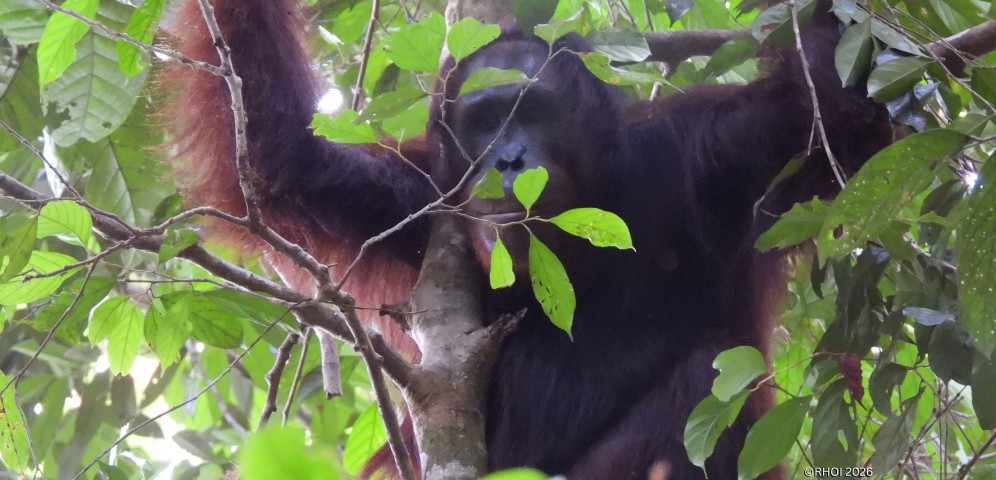
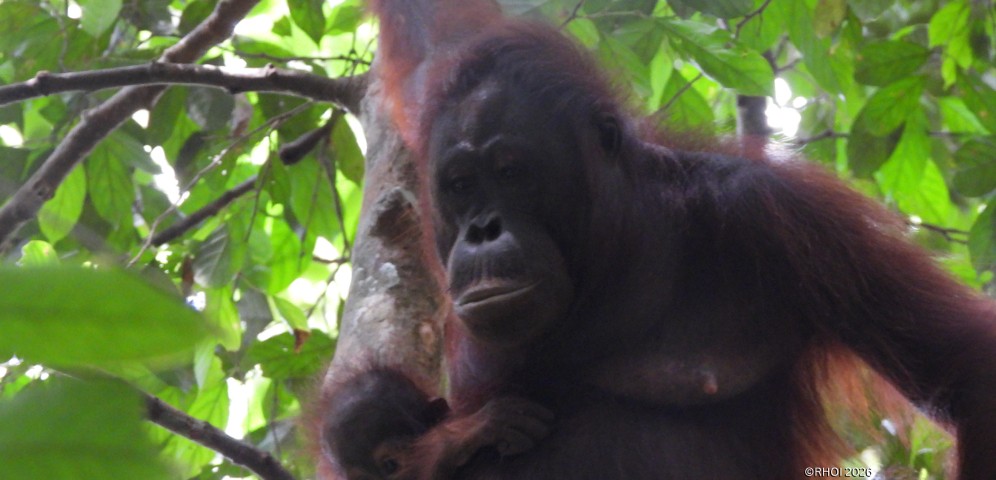
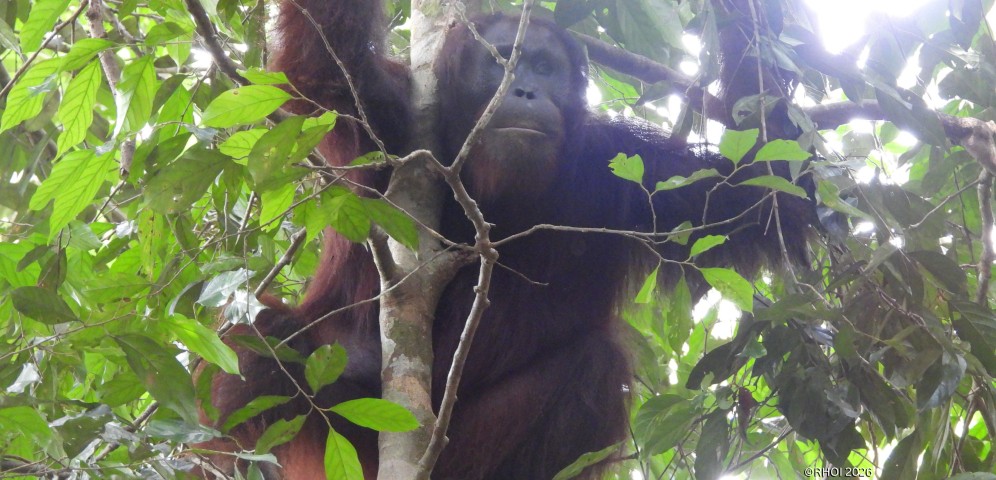
Borneo’s rainforest holds many stories about life continuing after orangutans return to nature. For rehabilitated orangutans, post-release life is a crucial stage to demonstrate their ability to forage, explore forest areas, build nests, and live independently.
In mid-July 2026, the Post-Release Monitoring (PRM) team of the Borneo Orangutan Survival Foundation (BOSF) had the opportunity to observe two rehabilitated orangutans, Yuniar and Bong, in the release forest area.
During a routine patrol, the PRM team walked along the path bordering Blocks C and D toward the entrance of Transect 11. Amid the dense vegetation, the team spotted two adult female orangutans exploring the forest area.
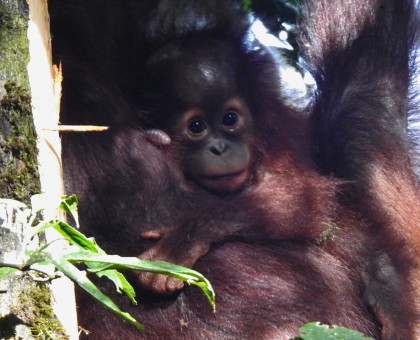
Identification results confirmed that the individuals were Yuniar, an adult female orangutan without a infant, and Bong, an adult female carrying her infant.
At the time, fruit season was underway. This condition offered the team a chance to observe how both orangutans utilized the diverse food sources available in their habitat.
Finding Diverse Foods in the Forest
During the observation, Yuniar and Bong were seen utilizing several types of natural food, ranging from lampaung fruit (Baccaurea lanceolata), rattan shoots, to termites retrieved from decaying tree trunks.
One of the most consumed foods at the time was lahung fruit (Durio dulcis), which was entering its fruiting season.
Yuniar was seen gathering lahung fruits in the trees and eating them. The presence of Bong and her infant in the same area gave the PRM team an opportunity to observe natural interactions between orangutan individuals when food resources were abundant.
For the PRM team, observations like this are not merely a chance to watch orangutans feed. Every observed behavior provides information on how individuals adapt post-release and how effectively they utilize the resources available in their habitat.
Can Rehabilitated Orangutans Truly Live Independently in the Wild?
Returning orangutans to nature does not stop once the release process is complete.
Most orangutans undergoing rehabilitation at BOSF previously lost their mothers, experienced negative interactions with humans, or missed the opportunity to learn life skills from their mothers in the wild. Therefore, after being released, their ability to live independently still needs to be monitored.
This is where the role of the PRM team becomes essential.
Post-release monitoring is conducted to understand how orangutans adapt to their new environment, including their ability to forage for natural food, move and explore territory, build nests, and interact with the environment and other individuals.
The PRM team also observes potential signs of human dependency, such as approaching the monitoring team too frequently or waiting for human presence as a source of food.
However, each individual undergoes a unique journey. Thus, successful adaptation is not determined by a single behavior alone, but is evaluated through various overall indicators over a period of time.
Signs of Successful Adaptation in the Wild
Observations of Yuniar and Bong highlight several key abilities that orangutans need after being released:
Utilizing diverse natural foods: Yuniar and Bong were seen consuming various types of food available in the forest, including lahung and lampaung fruits, rattan shoots, and termites. The ability to utilize diverse food sources is a critical part of an orangutan’s life in the wild.
Moving and exploring forest areas: Orangutans must be capable of moving from one location to another to find food sources and suitable places to rest. During the observation, Yuniar and Bong were seen exploring the forest area and subsequently moving toward a slope further away from the monitoring team.
On one occasion, Yuniar showed interest in moving closer to the PRM team. Bong responded by gently touching Yuniar’s face. This brief interaction became one of the most interesting behaviors recorded during the observation.
The team cannot determine the exact function of this behavior based on a single event alone. However, interactions like this show that orangutan social life maintains fascinating dynamics to study, even though orangutans are generally known as relatively solitary animals.
Living a natural social life. Orangutans do spend more time alone compared to some other great ape species. However, when food resources are abundant, multiple individuals can be found sharing the same area and showing tolerance toward one another's presence.
The presence of Bong alongside her infant also provides vital information regarding orangutan life after release.
When New Life Grows in the Forest
Bong has not only survived in her natural habitat, but she has also given birth to an infant now growing up alongside her in the wild.
In orangutan conservation efforts, the birth of a wild-born infant represents a major milestone for the long-term success of the release program. Infants born in the wild not only represent a new generation of orangutans, but also have the opportunity to grow up without ever experiencing human care from the start.
For Bong, her role as a mother comes with the natural responsibility to care for and guide her offspring throughout its growing years.
The PRM team's nearly three-hour encounter with Yuniar and Bong in Transect 11 offers a glimpse into orangutan life after returning to their natural habitat.
They forage, move, explore, interact with one another, and live according to the conditions of the forest they inhabit.
For BOSF, observations like this form a crucial part of the long-term evaluation process. Successful release is measured not just by whether orangutans reach the forest, but by their ability to survive, adapt, and live independently in the wild.
Yuniar and Bong demonstrate that the rehabilitation journey does not end when the cage door opens. That is precisely where a new chapter begins, as orangutans are given the opportunity to shape their own lives in the forest.
And when the PRM team watches from afar as Bong moves through the trees with her infant while Yuniar explores in search of food, that moment serves as a simple reminder of the ultimate goal of the entire rehabilitation process: giving orangutans back the opportunity to live as orangutans in the wild.
- Share
-

-