12 Oct, 2026
ORANGUTAN GURU’S TRANSLOCATION MISSION TO THE KEHJE SEWEN FOREST
BIODIVERSITY
The dynamics of land-use change create distinct challenges for the survival of orangutans.
These conditions can push orangutans out of their habitat and closer to human activity areas, as occurred with an orangutan named Guru, who frequently appeared along PT SRH’s operational access road, putting his life in danger.
Swift and measured actions had to be taken immediately. The question is, how swift and measured were the steps taken? Read Guru’s full story here.
Pre-Translocation Efforts Conducted Through Collaboration
Guru’s presence was identified after community members reported his sighting around PT SRH’s hauling road in Muara Bengkal District, East Kutai Regency. The report received through the East Kalimantan Natural Resources Conservation Agency (BKSDA) Call Centre served as the starting point for a series of rapid responses and collaboration.
Rescue operations for wild adult orangutans are extremely difficult to carry out without multi-party synergy. In Guru’s rescue case, a joint effort was established among East Kalimantan BKSDA, Conservation Action Network (CAN), the company, and PT Restorasi Habitat Orangutan Indonesia (RHOI). Since July 2026, the team initiated intensive field monitoring, tracking, and information gathering, using drone tracking combined with ground patrols to ensure surrounding environmental conditions remained conducive.
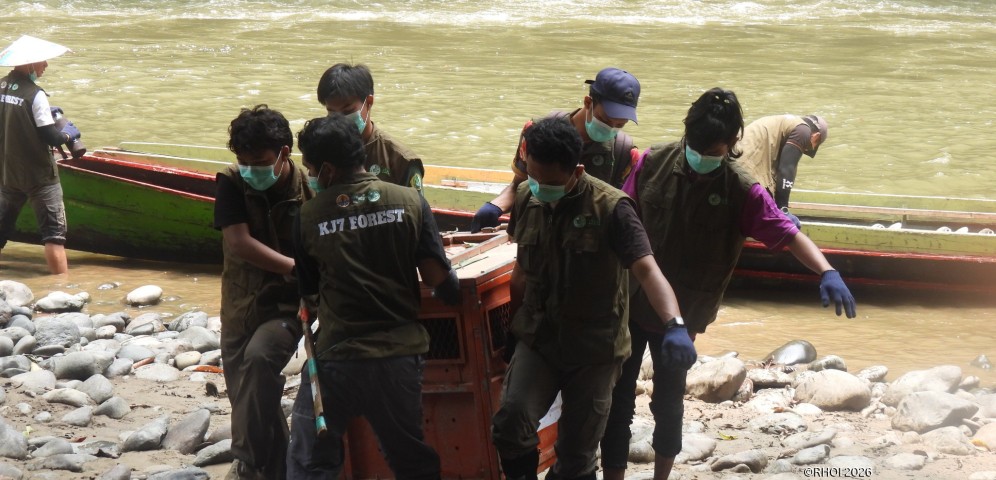
On September 17, 2026, the rescue operation for Guru was executed, followed by the translocation phase to the Kehje Sewen Forest. Logistic and operational support was prepared by PT RHOI to ensure the smooth execution of this effort.
Guru as an Exemplar of a Healthy and Mature Wild Orangutan
Rescuing Guru from a non-habitat area is one thing; ensuring that Guru is ready to return to the wild is another.
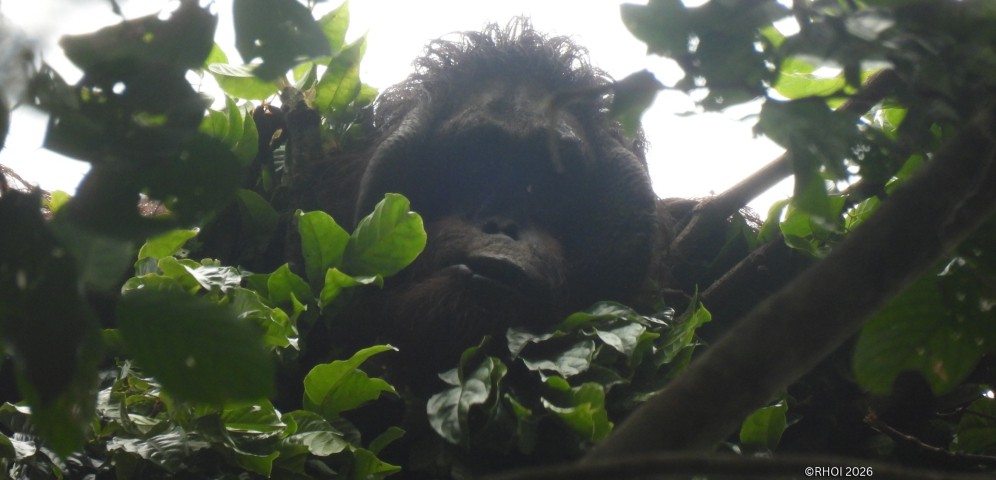
From medical examinations conducted by the veterinary team, Guru was identified as a male orangutan estimated to be around 25 years old with a body weight of ±51.6 kg. In his current state, Guru is in the prime of his life as an adult male orangutan, representing an ideal model of a healthy wild orangutan.
Evaluation results also indicated that he was very active, possessed sharp natural reflexes, and had a good appetite. These characteristics showed that despite temporarily moving near human activities, Guru had not lost his wild instincts.
This prime physical and mental health serves as Guru’s primary asset to adapt quickly to his new environment. As an adult male orangutan, Guru plays a vital role in the wild population structure, both in maintaining his territorial dynamics and in supporting the regeneration of the orangutan population in the Kehje Sewen Forest.
Challenges of Translocating Wild Adult Orangutans
The process of moving a wild adult orangutan like Guru involves an extremely high level of operational difficulty and risk. Unlike young orangutans or rehabilitated individuals accustomed to human presence, wild adult orangutans possess extraordinary physical strength and a high level of alertness.
Evacuation and ground transport pose the primary challenges, as terrain in the East Kutai region is often difficult to navigate, with winding routes, unpredictable weather, and limited transportation access. Transporting a translocation crate containing a wild adult male orangutan across land and river routes requires extraordinary caution.
Ensuring the quality of the destination habitat presents another challenge. Relocating an adult orangutan to a new site requires certainty that the area offers sufficient food availability, clean water sources, and a balanced orangutan population density to prevent territorial conflict.
Fortunately, the Kehje Sewen Forest fulfills all these criteria. As an Ecosystem Restoration area, Kehje Sewen provides a protected living space rich in the biodiversity Guru requires.
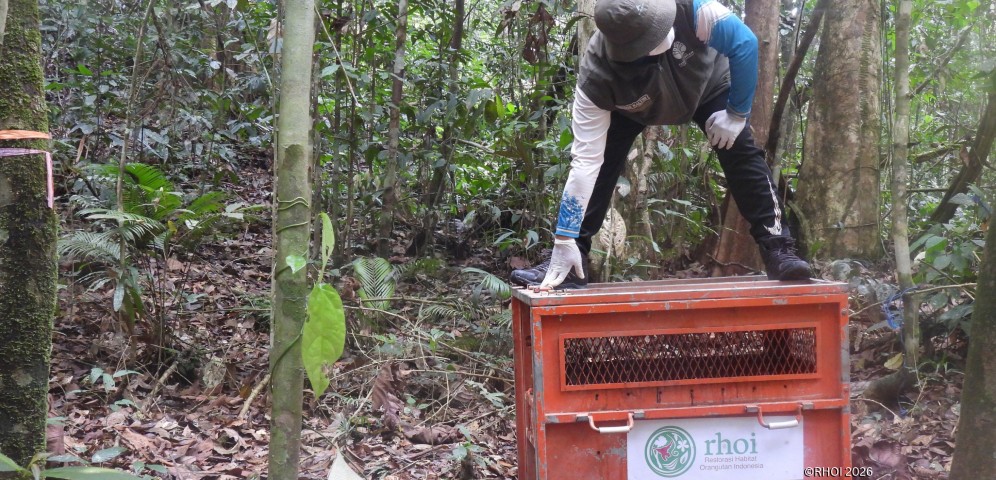
On September 18, 2026, Guru finally arrived at the Kehje Sewen Forest. The opening of the transport crate marked his introduction to the Kehje Sewen Forest.
Text by: PT RHOI Research and Biodiversity Team, East Kalimantan
- Share
-

-