26 Oct, 2026
DISASTER MITIGATION EDUCATION FROM AN EARLY AGE IN DEA BEQ VILLAGE
COMMUNITY DEVELOPMENT
The sustainability of Borneo's rainforest ecosystem depends not only on the hard work of teams in Ecosystem Restoration areas, but also on the responsiveness of communities in buffer villages. One key area bordering orangutans' natural habitat is Dea Beq Village, Muara Wahau District. In this village, PT Restorasi Habitat Orangutan Indonesia (RHOI) considers it essential to build awareness of environmental conservation and disaster preparedness, starting directly with the younger generation.
These efforts began at SDN 018 Muara Wahau on Thursday, August 20, 2026. Children gathered enthusiastically to participate in natural disaster mitigation education and simulation activities. This program was designed to help children recognize potential disaster risks around them and understand appropriate, safe evacuation actions during emergencies.
Interactive Learning and Emergency Evacuation Simulations
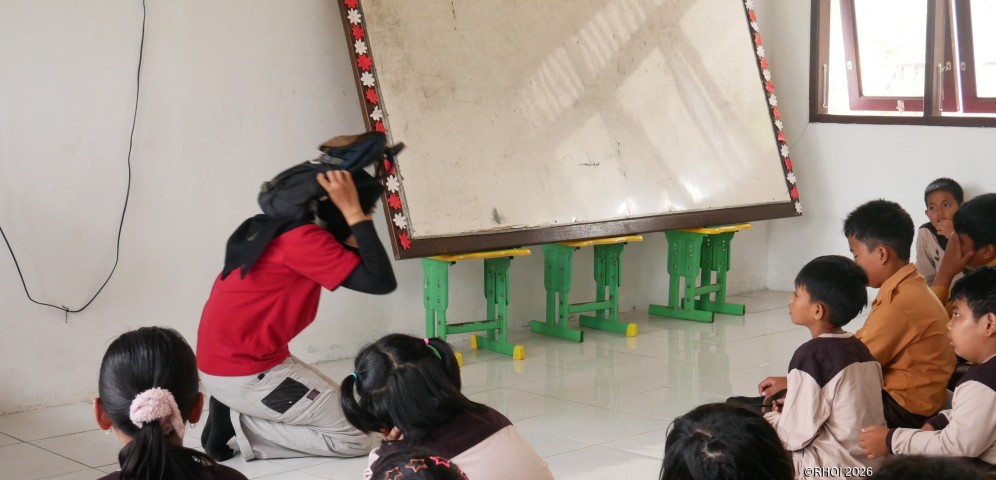
The series of educational activities began with a presentation on three types of natural disasters that often threaten the surrounding environment: earthquakes, forest or residential fires, and floods. In the classroom, children learned basic self-rescue steps, how to recognize evacuation symbols and routes, and procedures for reaching a safe assembly point.
The presentation session was highly interactive. The facilitation team presented engaging visuals to spark the students' curiosity. Every time a question was asked to the room, tiny hands raised in unison accompanied by cheerful, overlapping responses. The atmosphere grew even warmer when the simulation video began to play. Several children appeared glued to the monitor, absorbing every detail of the rescue scenes they might have previously only heard about in stories told by their parents or teachers.
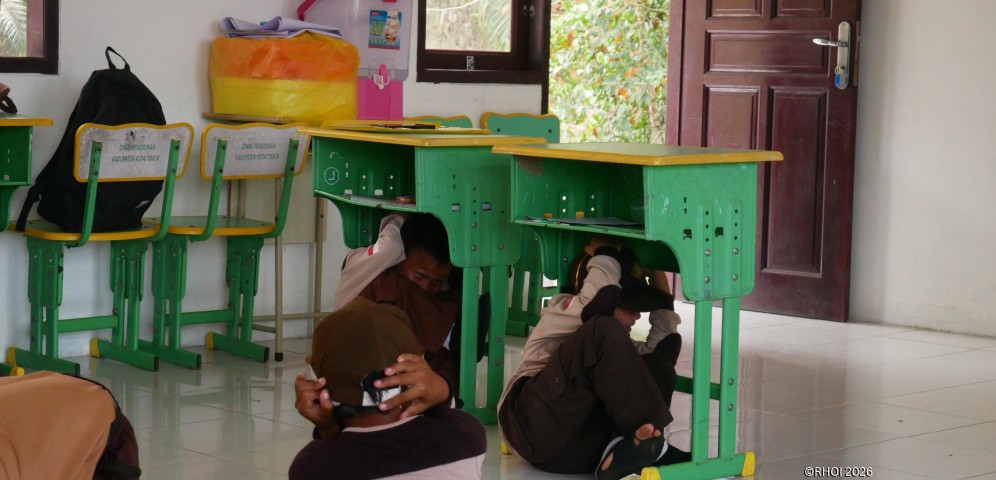
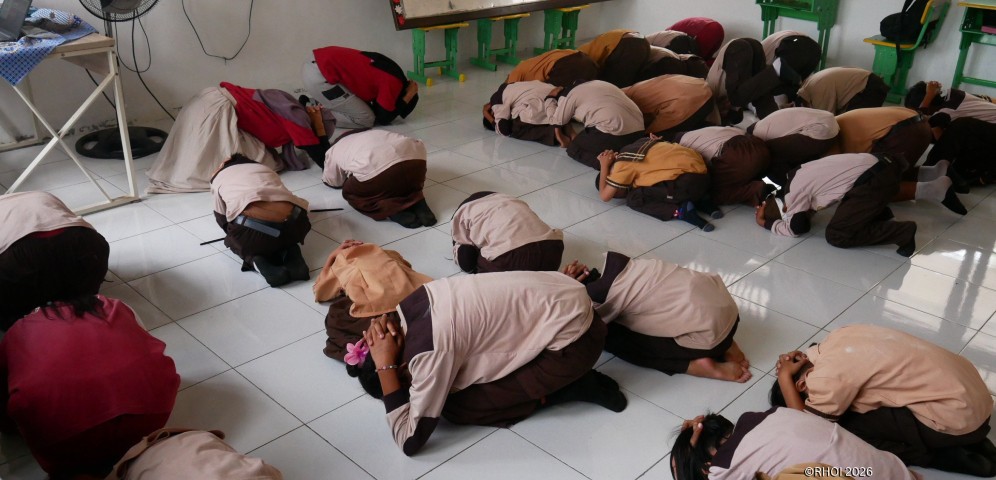
Once the theoretical understanding was deemed sufficient, the learning immediately proceeded to a practical phase through an emergency evacuation simulation. As soon as the artificial warning siren sounded, the classroom came alive with enthusiasm. The children promptly practiced covering their heads, walking bent over, and coordinating with one another to look for evacuation route signs.
Cheerful shouts and chatter echoed as they ensured everyone moved in the correct direction toward the assembly point in the open field. This simulation tested not only the children's physical agility but also instilled the habit of staying calm and structured when facing potential panic during a real disaster.
Firefighting Practice and Introduction to Extinguishing Tools
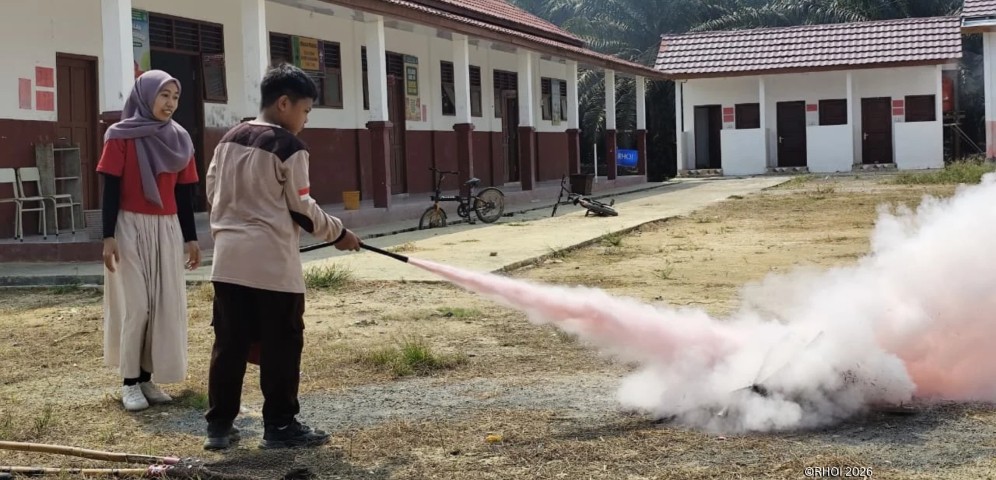
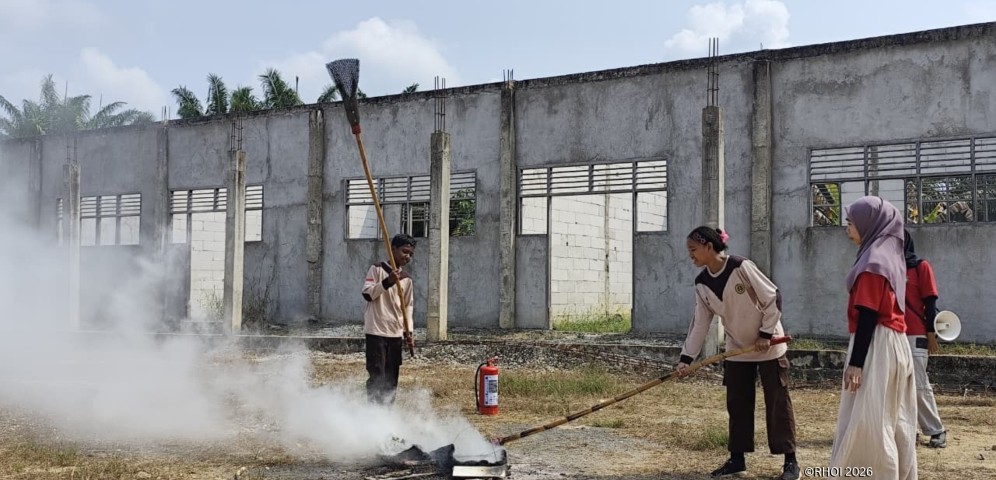
The excitement and enthusiasm of SDN 018 Muara Wahau students reached its peak when the activity entered the live firefighting practice session in the field. Because forest and land fires are among Borneo's biggest environmental risks, often threatening residential areas and orangutan habitat, teaching firefighting techniques early is vital.
During this session, children were introduced to two main types of extinguishing tools: Fire Extinguishers (APAR) for modern small-scale fires, and tree branches (fire beaters) as traditional, adaptive extinguishing tools for vegetated areas. The team demonstrated how to hold the hose, pull the fire extinguisher's safety pin, and use branch beaters to extinguish fire hotspots effectively and safely.
Students saw firsthand how these tools successfully contained artificial flames. An interesting moment occurred amidst the crowd of students watching with sparkling eyes. One child suddenly shouted innocently and enthusiastically, “I want to be a firefighter when I grow up!”
That simple yet honest exclamation clearly reflected how successfully this activity sparked their courage, empathy, and concern for the safety of the surrounding environment.
Instilling Awareness of Coexistence and Forest Protection
Beyond the lively evacuation simulation and the excitement of firefighting practice, PT RHOI aimed to convey a deeper message to the children of Dea Beq Village. Through this momentum, students were invited to understand the relationship between humans, nature, and the tropical rainforest surrounding their homes.
The children learned that the forest is not merely a stretch of tall trees or a source of timber, but a living ecosystem that supports many species of plants and wild animals, including orangutans. A well-hydrated Bornean forest naturally absorbs rainwater to prevent floods, while also stabilizing the climate and reducing droughts and major fires. Therefore, preserving the forest is essentially an effort to protect the shared home of both humans and wildlife.
Ultimately, true preparedness is measured not only by what we do when a disaster strikes, but by how well we protect, care for, and preserve nature before a disaster occurs.
Text by: Commdev Team PT RHOI, East Kalimantan
- Share
-

-