
06 Jul, 2026
THE IMPORTANCE OF HUMAN RESOURCE REGENERATION FOR THE SUSTAINIBILITY OF ORANGUTAN HABITAT RESTORATION
CONSERVATION SUPPORT
Building a house and maintaining it are two different things, yet both share the same goal: achieving the best possible form and function for that home, suited to the needs of its occupants, from one period to the next.
The same principle applies to orangutan habitat, except that orangutans cannot protect their own habitat, since too many of the threats they face lie far beyond their control. This is precisely why humans must step in to help safeguard both the habitat and the continued existence of orangutans.
Unfortunately, this effort is far from simple because humans themselves are bound by limited lifespans and limited capacity to apply the right knowledge at the right time. This is exactly why human resource regeneration is needed alongside the ongoing work of restoring orangutan habitat.
If there is one sentence that captures orangutan habitat restoration, it would be this: "This is not easy work." It might best be compared to a marathon spanning decades, since restoring a landscape that has already been damaged is not a task that can be completed in a single sitting.
That is why the Restorasi Habitat Orangutan Indonesia (RHOI) team has committed to making human resource regeneration one of its core programs, running hand in hand with efforts to protect orangutan habitat. Before going further into this regeneration program, let's first take a look at the current state of the orangutan habitat.
A Snapshot of Orangutan Habitat Today
To understand why human resource regeneration is so critical, we first need to grasp just how severe the pressure on orangutan habitat has become.
- Indonesia holds an estimated 14 million hectares of orangutan habitat, yet only 20 to 24 percent of it falls within protected conservation areas, the rest is scattered across production forests, plantations, mining concessions, and other land-use zones. In other words, the majority of orangutan habitat actually sits outside the zones that are genuinely safe from the threat of land conversion.
- An equally alarming pressure is reflected in data from the International Fund for Animal Welfare (IFAW), which reports that Borneo has been losing more than 3,200 km² of forest every year since 2000, with projections suggesting that up to 61.5 percent of orangutan habitat could be lost by 2025.
- A recent report further illustrates this reality: in one palm oil concession in West Kalimantan alone, around 27 hectares of land classified as orangutan habitat were cleared between January 2024 and March 2025, an area equivalent to roughly 20,000 car parking spaces. Destruction on this scale repeats itself across multiple locations, and with each occurrence, the window of time available to save what habitat remains narrows further.
These conditions mean orangutan habitat is not only shrinking, it is also fragmenting into small, isolated pockets cut off from one another. When the forest corridors connecting one area to another disappear, orangutan populations become trapped in increasingly confined spaces, losing access to food sources and becoming more vulnerable to human-orangutan conflict.
This is why habitat restoration is a non-negotiable answer, one that, in reality, demands time. And time can only be filled through the consistency of the people carrying the work forward, generation after generation.
Also read:
- Where Is The Forest Begin Again
- Caring For Natural Heritage With Indigenous Community
- Caring For The Forest, Growing With The Community
How Communities Are Responding to the Condition of Orangutan Habitat
The habitat crisis is not only a matter of how much forest has been lost, but it is also about how surrounding communities respond to a situation that keeps shifting.
There has been encouraging progress in recent years. Conservation awareness among Indonesia's younger generation is growing faster than it did in previous decades. Research shows that environmental education involving direct, hands-on experience is far more effective at shaping pro-environmental behavior that persists into adulthood.
Yet behind these gains lies a deeper structural challenge. Awareness without genuine involvement often stops at sympathy rather than translating into action. Many young people care deeply about orangutan-related issues but have yet to find a clear path toward truly engaging in conservation work, whether as a career or as a long-term contribution.
Meanwhile, communities living in direct proximity to forest areas face a far more complex dilemma. They are not adversaries of conservation they are people who, every single day, must navigate the tension between economic necessity and the presence of the forest around them.
How they respond to the condition of orangutan habitat depends heavily on the extent to which they are involved, given proper understanding, and offered sustainable livelihood alternatives.
This is what elevates human resource regeneration beyond simply replacing retiring staff. It is about building an ecosystem of people who possess both the capacity and the commitment to carry restoration work forward, for however long that journey may take.
Human Resource Regeneration as a Long-Term Effort in Orangutan Habitat Restoration
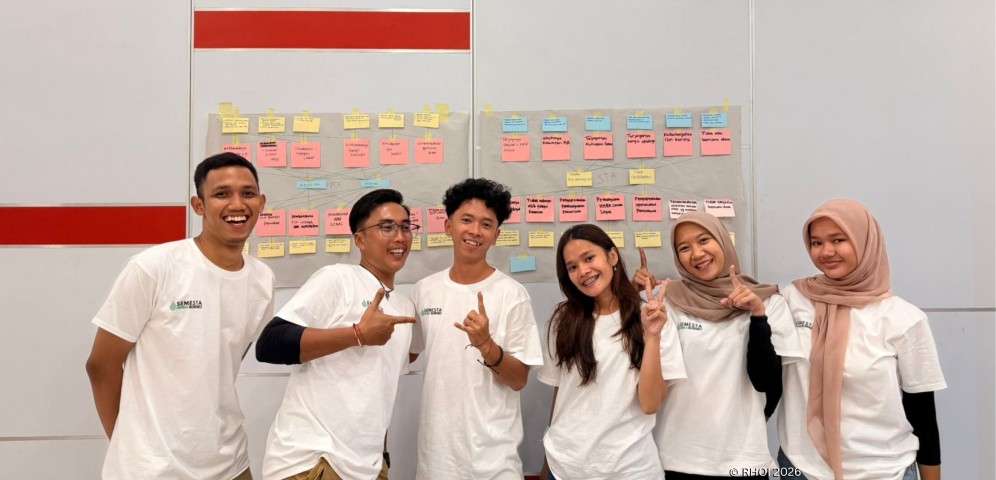
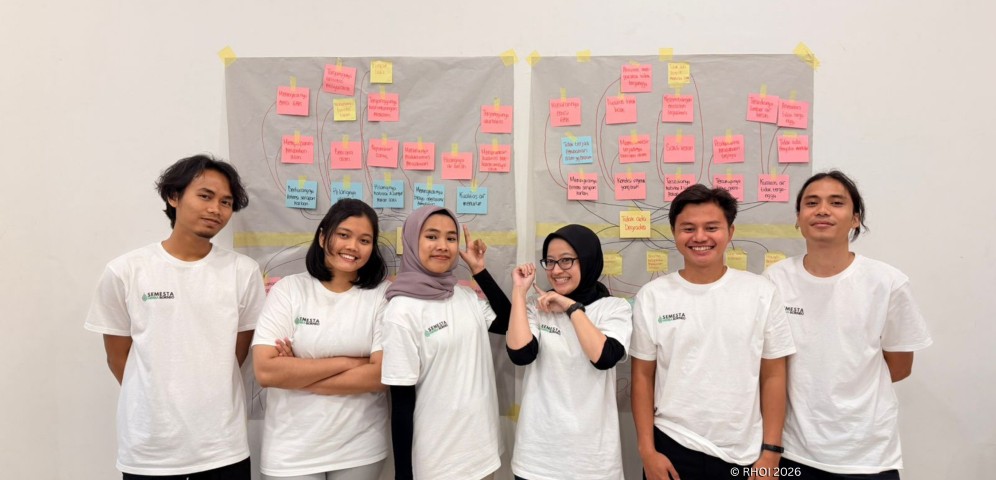
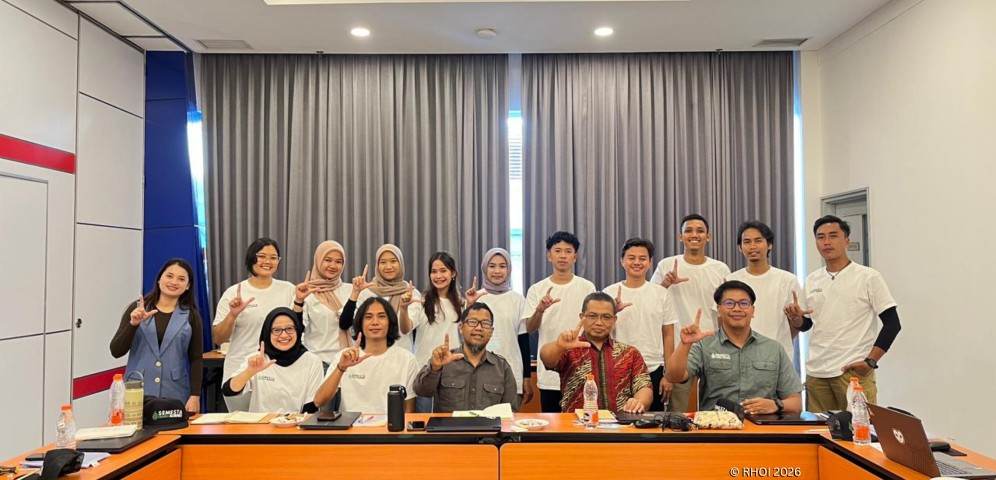
Recognizing this urgent need, the Restorasi Habitat Orangutan Indonesia (RHOI) team held a Carbon Measurement and Mitigation Action Plan Document (DRAM) Training from June 22–27, 2026, in Samarinda, East Kalimantan.
This activity is part of a broader effort to strengthen human resource capacity to support sustainable management of restoration areas, while also contributing to mitigation efforts to address the potential impacts of climate change.
The training brought in an instructional team from PT Semesta Himba Borneo, who delivered material covering fundamental carbon concepts and policy, carbon measurement methods, and field data collection and processing.
Throughout the training, participants also gained an understanding of the role forest ecosystems play in absorbing and storing carbon, as well as the importance of accurate data management in supporting various climate change mitigation programs.
Beyond theoretical knowledge, participants were also given the opportunity to engage in hands-on practice and simulations, allowing them to apply the material directly.
This training represents a strategic step for RHOI in developing human resource capacity to prepare a workforce that is genuinely capable and well-equipped.
This effort is increasingly significant as global attention to climate change mitigation and forest area management intensifies. RHOI remains committed to continuously strengthening its human resource capacity through a range of relevant competency-building activities.
Through this training, it is hoped that stronger synergy will emerge in support of effective, science-based restoration area management oriented toward long-term sustainability.
Text by: Community Development Team at Muara Wahau, East Kalimantan
- Share
-

-


