
16 Feb, 2026
WHERE THE FOREST BEGINS AGAIN
ECOSYSTEM RESTORATION
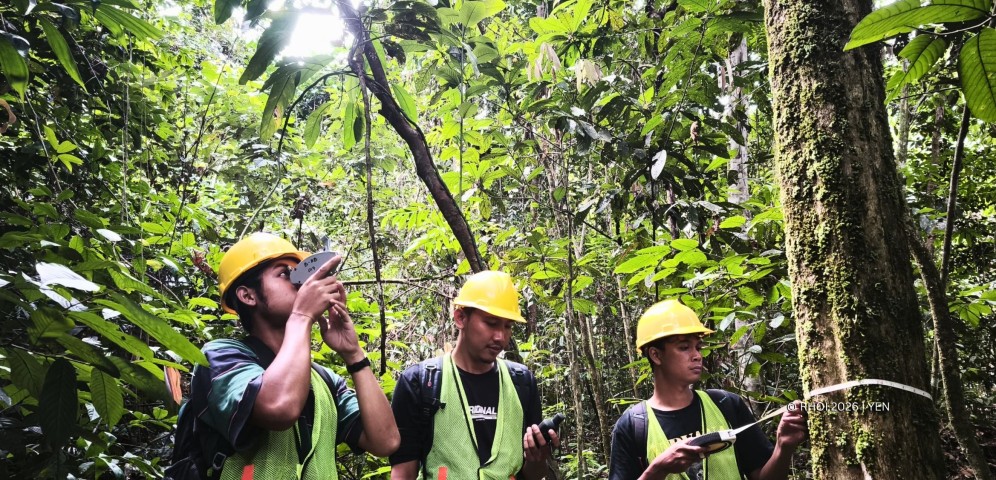
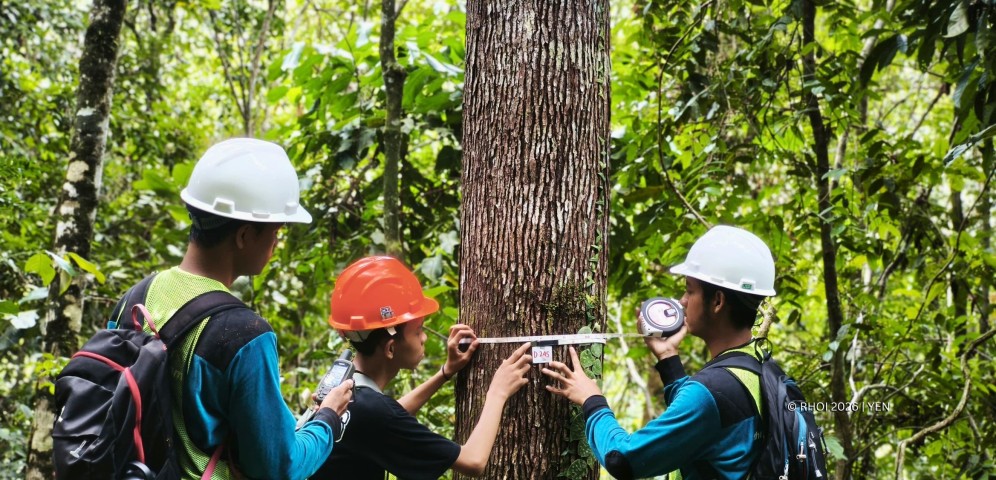
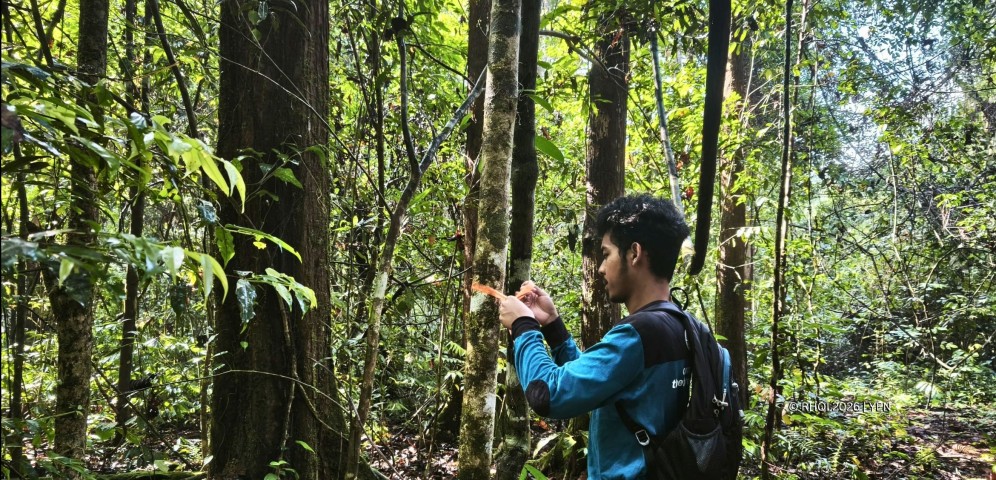
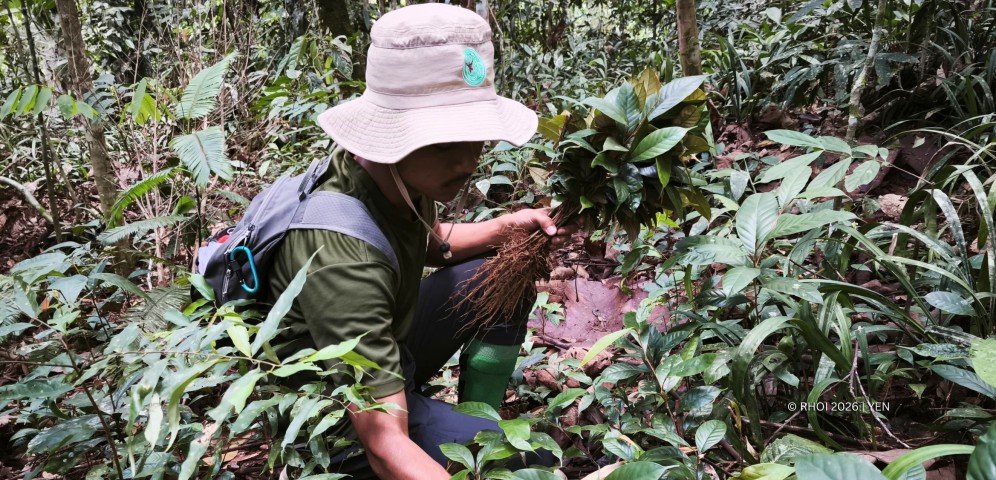
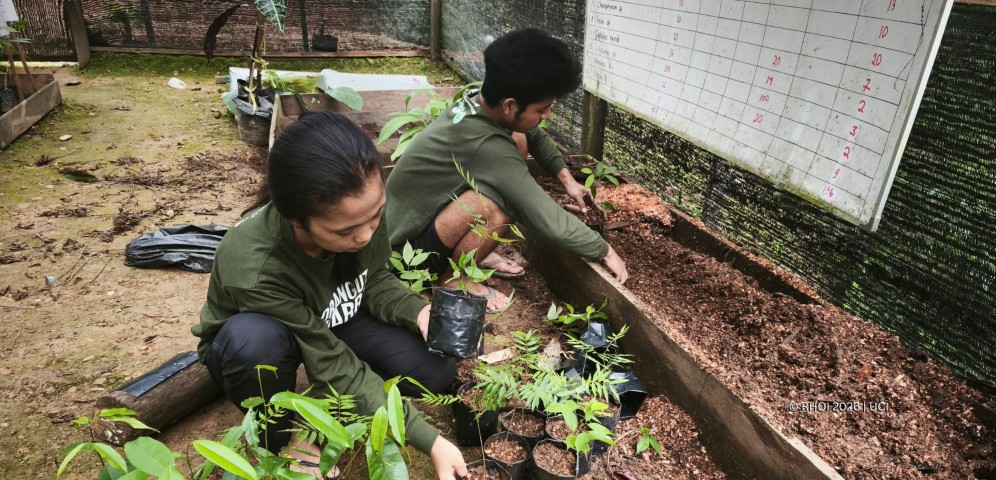
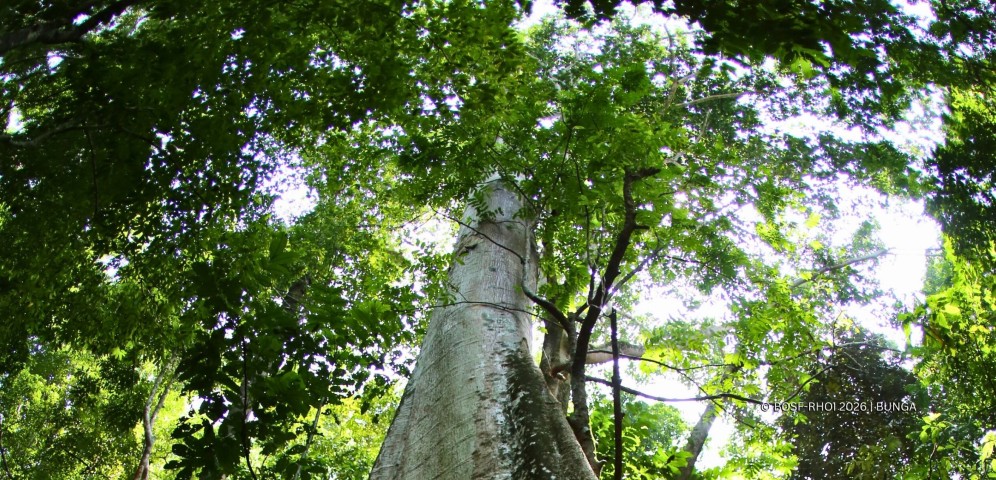
Ecosystem restoration in the Kehje Sewen Forest is a long and interconnected process. One of its key components is habitat management and enhancement, carried out by our Habitat Management and Enhancement Team (RE-PPH) under the Indonesian Orangutan Habitat Restoration Program (PT. RHOI).
Exploring the Forest in Search of Life’s Sources
Previously, the RE-PPH team conducted replanting activities in several open areas using seedlings that had been propagated and nurtured at the nursery within the monitoring camp area. However, before these seedlings could be grown and replanted in the forest, there was a crucial stage that often goes unnoticed: identifying mother trees as seed sources.
Read also: PLANTING HOPES IN THE KEHJE SEWEN FOREST
To find suitable mother trees, the RE-PPH team ventured into the Kehje Sewen Forest equipped with survey tools. Their mission went beyond routine patrols or monitoring. They sought selected trees that were healthy, mature, and of high quality, which would later serve as reliable seed sources for forest restoration efforts.
Along the forest trails, our team carefully examined each tree. The selected mother trees had to meet specific criteria, including straight trunks, dense canopies, freedom from disease, and a proven record of producing fruits favored by orangutans, such as species from the genera Ficus, Artocarpus, and other important food trees. This activity also marked an initial step in enriching forest vegetation and securing natural food sources for orangutans.
Documenting Mother Trees as the Foundation of Restoration
Once a suitable tree was identified, the team paused to record detailed data. Tree height and diameter were measured, overall health conditions were noted, and GPS coordinates were recorded to ensure the trees could be located again in the future. This data forms a vital foundation for planned and sustainable seed collection, carried out without disrupting the surrounding ecosystem.
Read also: "EMBUNG" PLAYS A DUAL ROLE AT KEHJE SEWEN FOREST
The work was not without challenges. Steep terrain, thorny undergrowth, and dense forest conditions tested the team’s endurance. Yet, every successfully identified mother tree brought renewed motivation, as these trees will play a crucial role in providing food and habitat not only for orangutans, but also for other wildlife and biodiversity in the future.
From Mother Trees to the Nursery, and Back to the Forest
Seeds collected from these mother trees are then propagated and cared for at the nursery. Once the seedlings are strong enough, they are replanted in forest areas requiring vegetation enrichment, continuing the reforestation efforts carried out previously. In this way, restoration unfolds as a complete cycle: from the forest, nurtured in the nursery, and returned to the forest.
Read also: THE JOURNEY OF REFORESTATION AT KEHJE SEWEN FOREST
Each documented mother tree represents a long-term investment in ecosystem sustainability. This approach ensures that the trees planted are native species, well-suited to local habitat conditions and the needs of biodiversity—especially orangutans.
Preparing a Natural Habitat for Orangutans
Through this series of activities, the RE-PPH team under the RHOI program aims to restore the Kehje Sewen Forest not merely as a green landscape, but as a natural habitat capable of sustainably supporting orangutan life. This effort aligns closely with the reintroduction program of the Borneo Orangutan Survival Foundation (Yayasan BOS), whose primary goal is to provide suitable release sites for rehabilitated orangutans from the Samboja Lestari Rehabilitation Centre.
These restoration initiatives are a vital part of preparing Kehje Sewen Forest as a future orangutan release area. With a well-maintained habitat and sufficient natural food sources, the forest is expected to become a safe home where orangutans can live, thrive, and continue their natural life cycles.
Text by: RE-PPH Team, PT. RHOI at Kehje Sewen Forest, East Kalimantan
- Share
-

-


